
If there were a pill that could lower your risk of early death by up to 50%, add years to your life, and boost your daily energy, you’d probably take it. The good news? It already exists, and it’s called movement. Research indexed in PubMed shows that getting about 150 minutes of moderate exercise each week (think brisk walks, bike rides, or dancing in your kitchen) can reduce your risk of premature death by around 30% (Arem et al., 2015). That’s part of why celebrations like National Senior Health & Fitness Day highlight the importance of staying active at every age. Move it or lose it, right?
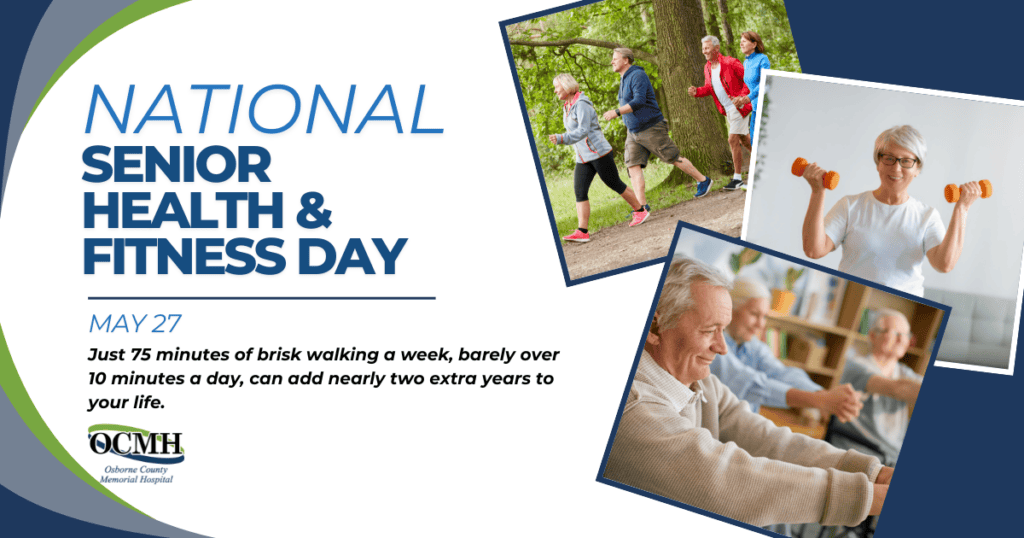
Here’s where it gets even better: you don’t need to go all-in to see results. Just 75 minutes of brisk walking a week, barely over 10 minutes a day, can add nearly two extra years to your life. Want more? Staying active at higher levels can add up to four years. The biggest win comes from simply going from “not much” to “something,” proving that small steps really do lead to big changes (Moore et al., 2012).
The (work) capacity of the individual should exceed the requirements of the task. So don’t skip the weights and compound movements like sit-to-stands, your future self will thank you. Strength training isn’t just for building muscle; it’s linked to a longer life and better heart health, too (Saad et al., 2022). Perform sit-to-stands from a height where ten reps is difficult and perform daily until easy, then add another set of ten and continue to perform daily. Once two sets are easy, you can start the process over with a lower seat or add some resistance by using a dumbbell or even a can of soup using the same repetition scheme and progression. The sit-to-stand regimen alone can significantly improve your quality of life.
The bottom line: This is a journey, you don’t need perfect workouts; you just need consistent ones. Walk more, lift a little, move often… and let those minutes add up to years.
References
Arem, H., Moore, S. C., Patel, A., Hartge, P., Berrington de Gonzalez, A., Visvanathan, K., Campbell, P. T., Freedman, M., Weiderpass, E., Adami, H. O., Linet, M. S., Lee, I. M., & Matthews, C. E. (2015). Leisure time physical activity and mortality: A detailed pooled analysis of the dose-response relationship. JAMA Internal Medicine, 175(6), 959–967. https://doi.org/10.1001/jamainternmed.2015.0533
Moore, S. C., Patel, A. V., Matthews, C. E., de Gonzalez, A. B., Park, Y., Katki, H. A., Linet, M. S., Weiderpass, E., Visvanathan, K., Helzlsouer, K. J., Thun, M., Gapstur, S. M., Hartge, P., & Lee, I. M. (2012). Leisure time physical activity of moderate to vigorous intensity and mortality: A large pooled cohort analysis. PLoS Medicine, 9(11), e1001335. https://doi.org/10.1371/journal.pmed.1001335
Saad, M. A., et al. (2022). Association between resistance training and mortality risk: A systematic review and meta-analysis. British Journal of Sports Medicine. https://doi.org/10.1136/bjsports-2021-104136