
Savings associated with Medicare Advantage may look enticing, but look further and understand the risks
Medicare open enrollment is scheduled to run Oct. 15 to Dec. 7. That’s when seniors can switch coverage between Original Medicare and Medicare Advantage, or change a prescription drug plan. At first glance, it may be easy to see the appealing parts of Medicare Advantage. Original Medicare includes Part A, for inpatient hospital and skilled nursing care, and Part B, for doctor services. These plans typically cost about $185 a month (with the cost deducted from your social security check). Many people pay extra for Medigap, to cover copays and other out-of-pocket costs, as well as a Part D plan for drugs.
Medicare Advantage plans (also called Part C), provide the benefits of Part A, B, and often D, usually for about the same amount, with lower copays, so there’s no need for Medigap. It is important to note that enrollment in a Medicare Advantage (Part C) plan does not eliminate your obligation to pay the Medicare Part B premium. You will still see this deduction on your social security benefits. Some Medicare Advantage plans offer benefits not in Original Medicare, such as fitness classes or vision and dental care.
This often sounds good – but review the details closely. Choosing between the two requires careful consideration of your finances and health needs. Medicare Advantage plans can carry hidden risks, especially for people with major health issues. Some people in Medicare Advantage may end up paying unexpectedly high costs when they become ill or find that their network lacks the providers they need.
With Original Medicare you can see any provider who accepts Medicare, which is most. However, Medicare Advantage plans typically require that you get care from a more limited network of providers, and in most cases, you will need a pre-authorization from the insurance payer to see specialists, receive Part B drugs, get skilled nursing facility stays or inpatient hospital stays, receive mental health services or receive diagnostic services such as procedures, labs, tests, therapy, dialysis, hearing, eye exams, dental care and many other services.
A study in the Annal of Internal Medicine found that switching to Medicare Advantage was associated with increased financial burden among vulnerable populations, especially those with low incomes .
Medicare Advantage plans may be especially problematic for people in rural areas. A 2024 study found that nearly six in 10 Medicare beneficiaries living in rural areas were in Original Medicare driven by that fact that there was limited participation of local doctors and hospitals in Medicare Advantage plan networks. The network of providers in rural areas are especially narrow, making it harder for people to get care.
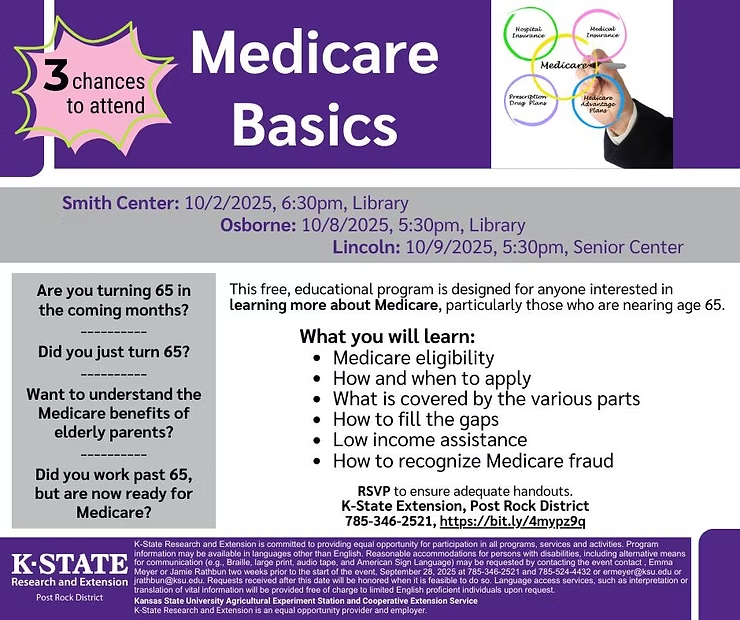
If you are interested in learning more about these programs, consider taking advantage of the upcoming local educational opportunities provided by Post Rock Extension.
Information in this post sourced from the Kansas Hospital Association.